“We Don’t Need a Guide. We’ll Manage Ourselves.”

Updated: Aug 18
I hear this all the time.
Usually, it comes from lovely, intelligent people who have been to Israel before.
Sometimes they came on a gap year in the 1990s.Sometimes they spent a semester here in college. Sometimes they visited cousins in Ra’anana fifteen years ago and are convinced they “basically know the country.”
And nowadays, there’s a new addition:
“We have ChatGPT.”
Honestly, I understand the thinking.
Flights are expensive. Hotels are expensive. Israel is expensive. People assume that a guide is a luxury add-on rather than an essential part of the experience.
But after years of helping visitors plan trips throughout Israel, I can tell you something very clearly: The people who think they don’t need a guide are often the very people who would benefit from one the most.
Let me tell you about “Jack.” (Not his real name.)
Jack was confident from the beginning. He and his wife were bringing their children to Israel for a family trip.
He had spent a year in Israel as a student decades ago and felt completely comfortable handling things himself.
“We just need help with hotels and basic planning,” he told me. “We don’t really need guiding except for a tour of the Old City in Jerusalem. We like to explore on our own.”
Perfectly reasonable, no?
So we helped create the framework for the trip: the route, hotel recommendations, timing, restaurant suggestions, and a sensible flow through the country. That part matters enormously, by the way.
A well-planned Israel trip can save travelers huge amounts of stress, time, money, and unnecessary frustration. Good planning creates structure. It gives people confidence. It helps them maximize their time.
At first, everything was exciting! Jerusalem was emotional. Tel Aviv was energetic. The beaches were beautiful.
But then came the North.
And that’s where Jack realized something important: A great itinerary and a great guide are not the same thing.
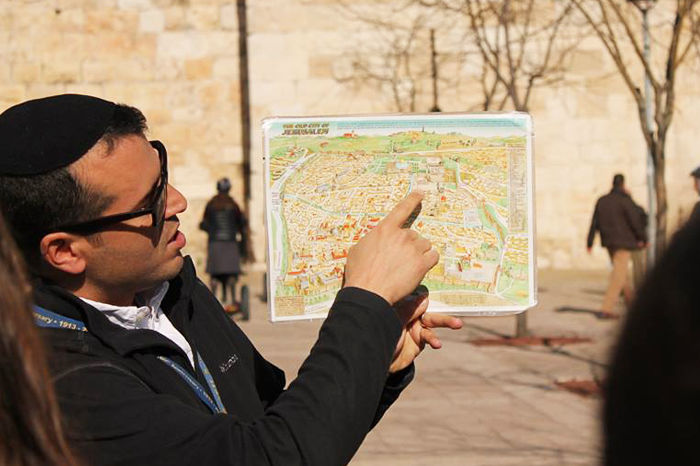
Because even with excellent planning, the North of Israel is not simply “drive somewhere pretty and stop.”
It’s layers upon layers of history, security realities, hidden gems, local culture, family-friendly activities, wineries, nature reserves, viewpoints, Druze villages, boutique food spots, stories, shortcuts, and timing.
An itinerary can tell you where to go. But a guide transforms what happens when you get there. Without someone who truly knows the area, people often miss 80% of what’s around them.
Jack’s family still had good hotels. They still had excellent restaurant recommendations. They still had a smart route. But they lacked interpretation, context, flexibility, insider knowledge - human connection.
Nobody was helping them understand what they were actually seeing.
The family spent too long driving. They ended up at overcrowded locations at the wrong times. They missed spectacular sites that were literally ten minutes away from where they already were. The kids became frustrated and restless. Lunches became random and disappointing. Everyone got tired of trying to “figure it out.”
And perhaps most importantly:
Jack stopped enjoying the trip. Because that’s the hidden part nobody talks about. When families DIY Israel, somebody becomes the project manager. Somebody is navigating. Somebody is checking parking. Somebody is researching lunch options. Somebody is trying to understand whether a site is worth the drive. Somebody is troubleshooting constantly.
Eventually, Jack called me. “You were right,” he admitted. “We need help.”
We arranged guiding for several days in the North. The difference was immediate.
Suddenly the family discovered places they never would have found alone. The guide adjusted the pace for the children. He knew exactly when to avoid crowds. He understood which hikes were realistic and which weren’t. He took them to a small local restaurant they still talk about. He explained things no app or AI tool could ever fully capture.
And for the first time since arriving in the North, Jack relaxed. Because a great trip planner creates the structure for a successful trip. A great guide elevates the experience in ways that even the best itinerary alone cannot.
Now, to be clear: not every day needs a guide.
Israel can absolutely be explored independently at times. In fact, some of the best trips combine guided days with relaxed self-guided days.
But dismissing guides entirely often comes from misunderstanding what a great guide actually does. A great guide is not simply a person reciting historical facts. A great guide is a cultural translator. A storyteller. A fixer. A strategist. A local insider. A stress-reducer. A memory-maker.
And in a country as layered, emotional, complicated, beautiful, and fast-moving as Israel, that expertise matters.
Especially now. Because Israel is not simply a place you visit. It’s a place you understand.
And that experience becomes infinitely richer when the right people help unlock it.
If you’re ready to plan your own meaningful Israel journey, I’d love to hear from you—you can reach out via my contact form
More Thoughts on Meaningful Travel in Israel
Should You Pay More to Make Sure You Actually Get to Israel?
Coming to Israel for the Chagim? Don’t Leave Chol Hamoed to Chance
How One Mom's Israel Foodie Dream Turned into Burgers, Pizza... and a Happy Family
The Best Israel Memories Don't Always Come with the Biggest Price Tag
Visiting Israel? It's the Little Things That Can Catch You Out
The Biggest Mistake Families Make Planning an Israel Itinerary
Why You Should Book Your Israel Hotels Through an Experienced Agent
Hotel or Apartment? The Israel Vacation Dilemma Many Families Face



Comments